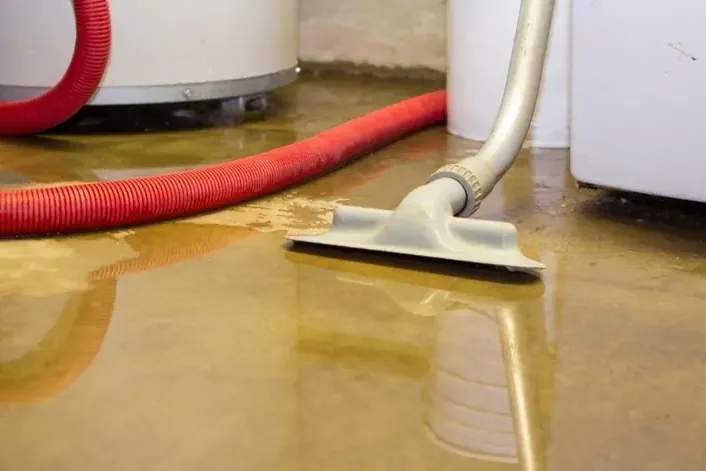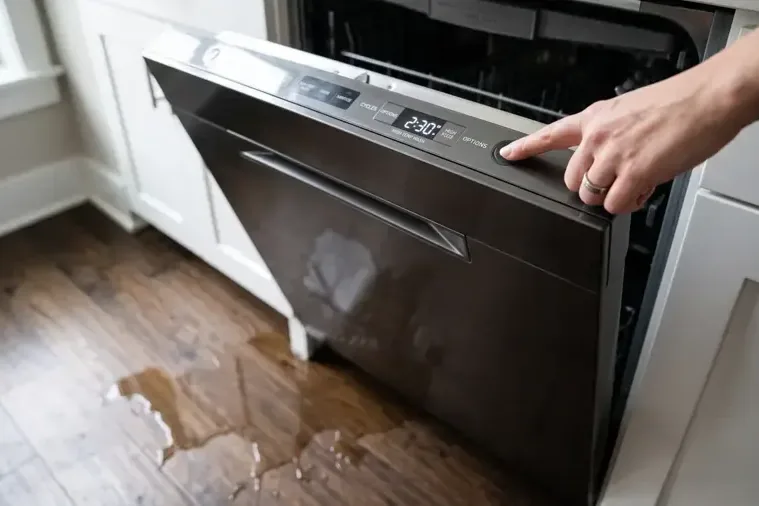
A dishwasher leak in a Duarte kitchen can disappear beneath a cabinet before a large puddle forms. The important boundary is the full wet assembly: appliance recess, floor covering, cabinet base and adjoining wall. A useful cleanup plan follows that route and keeps the appliance repair connected to the drying work.
Key takeaways
- Stop appliance use when leakage appears and keep people away from wet electrical equipment.
- Photograph the recess and cabinet edges before moving damaged contents.
- Separate the appliance repair decision from the inspection of wet building materials.
- Check beneath accessible floor edges before declaring the kitchen dry.
- Keep replacement cabinets and new floor coverings out until the underlying assembly is ready.
The first puddle identifies a starting point
Water visible at the dishwasher door may come from a door seal, a connection or another part of the appliance. The person inspecting the failure needs the operating circumstances: whether the machine was filling, washing, draining or idle when the water appeared. That account helps focus the repair without guessing from the puddle alone.
Occupants leave the leaking machine unused and stay away from plugs or controls reached through water. A reachable shutoff on a dry route can stop the release; damaged or inaccessible controls require qualified help. The appliance stays in place until a professional checks its connections and the surrounding electrical conditions.
The appliance water cleanup process includes the room around the machine. Repairing a loose connection can stop new water while older moisture remains beneath the kitchen floor. The initial inspection therefore records both the suspected source and the visible direction of travel.
- Record the operating cycle at discovery.
- Photograph water at the appliance opening.
- Keep children and pets outside the wet area.
Cabinet bases can conceal the widest spread
A toe kick hides the space under a cabinet, so the visible front can remain clean while water reaches unfinished material behind it. The inspection follows accessible edges and checks adjoining units, particularly where a continuous base crosses from the dishwasher recess toward the sink. Measurements belong on a simple kitchen sketch.
Stored cookware and cleaning products may block the view inside a neighboring cupboard. Items can be relocated after the area is safe, with photographs showing their original position and any visible damage. The cabinet interior, bottom panel and wall behind it need separate observations because they are different parts of the assembly.
Removal should answer a specific question, such as whether liquid is trapped beneath a base or whether a swollen panel still holds its attachment. A detached toe kick can expose a useful inspection route. The remaining cabinet needs its own access assessment before drying equipment is arranged.
- Inspect the recess beside the machine.
- Mark swollen edges and loose attachments.
- Identify wet materials behind removable trim.
Floor transitions deserve their own readings
A kitchen floor may meet another covering at a doorway or beneath a movable appliance. Water can cross that junction and remain between layers even after the exposed surface has been wiped. An inspection extends into the adjoining room when readings or visible damage show continued travel beyond the kitchen boundary.
The crew records what is actually installed: covering, backing, adhesive where visible and the supporting surface beneath. A previous remodeling seam can change access or create a concealed pocket. Those findings matter more than whether the top finish still looks attractive after the puddle disappears.
Water extraction removes accessible liquid before the remaining assembly is evaluated for drying. Any decision to lift a section should account for attachment, contamination and the condition of the layers below. The record should distinguish an exploratory opening from material removed because it cannot be retained.
- Follow wetness through doorways.
- Inspect thresholds and exposed backing.
- Record each layer as access becomes available.
Contents and fixed finishes need different decisions
A movable mat, a box of pantry goods and a fixed cabinet panel should not receive the same salvage decision. Each item has a different use, material and degree of water exposure. The contents list identifies the object and its location instead of grouping everything in the room as one kitchen loss.
Food or other consumables exposed to dirty water require appropriate disposal decisions. Items waiting for assessment should be separated from unaffected storage, without carrying drips across dry rooms. Photographs and labels preserve the connection between the original cupboard and the item when the kitchen is later cleared for equipment.
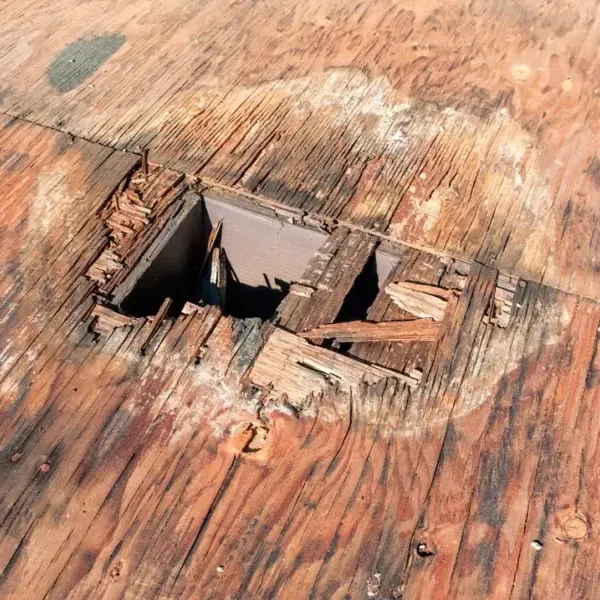
Fixed surfaces receive their own inspection for distortion, delamination and loose fasteners. A panel may dry yet remain physically damaged. Keeping that distinction in the work record helps the repair contractor understand why a cabinet component needs replacement even after moisture readings have improved.
Air needs a path to the damp surfaces
Equipment placed in the middle of a kitchen cannot automatically reach a sealed space beneath cabinetry. A drying plan identifies the surfaces that need airflow and the openings available to reach them. The crew also considers safe walking routes, nearby appliances and equipment drainage before leaving the setup operating.
A dehumidifier manages moisture released into the room air, while air movement supports evaporation at exposed surfaces. The arrangement should respond to the actual materials and their accessibility. A cupboard with a closed back and a floor trapped beneath a base may require different access from an exposed wall edge.
The structural drying assessment uses repeated material readings to test whether that arrangement works. If a location stops improving, the next investigation concerns the source, trapped layers and access. Adding equipment without identifying the restriction can leave the same concealed pocket untreated.
A repaired dishwasher still needs an installation check
The appliance technician and restoration crew have separate completion tasks. The technician addresses the failed component and any reconnection work. The restoration crew establishes the condition of the surrounding structure, including areas that will become hard to reach when the machine slides back into its recess.
Before reinstallation, the record should show the condition of the floor and wall behind the appliance. A cabinet opening that is about to be concealed deserves a final photograph. Any remaining distortion, damaged backing or unfinished repair needs to be identified before that access disappears.
A controlled operating check belongs with the qualified appliance repair process. The homeowner can retain the repair description alongside the drying notes so later moisture has a clear comparison point. A new puddle after reconnection warrants a fresh source assessment instead of an assumption that old water simply returned.
The final kitchen record should be easy to follow
A useful closeout describes the rooms inspected, material removed, areas retained and repairs still needed. Reading locations should have recognizable labels, such as the sink cabinet corner or the doorway threshold. A page of unexplained numbers offers little help when a flooring installer arrives after the drying equipment has left.
The crew checks the affected floor and cabinet layers against suitable dry reference readings, then records the results at labeled locations. A remaining access restriction gets a specific follow-up task and a responsible contractor. The final plan includes the concealed cavity as well as the visible surface where the first puddle appeared.
For a Duarte household, the result should be a usable sequence: source corrected, concealed areas assessed, retained structure dried and finish work defined. Receipts, photographs and material notes belong together. Keeping that sequence clear reduces confusion between an appliance warranty question and damage to the surrounding kitchen.
Questions
Can water reach the next cabinet without a large floor puddle?
Yes. A connected space beneath cabinet bases can carry water sideways. Inspection of accessible openings and measurements along adjoining units can reveal the extent before every surface shows staining.
Should the dishwasher be pulled out immediately?
Moving it can strain connected pipes, hoses or wiring. A qualified person should establish safe isolation and a clear removal path before the appliance is shifted.
Does a swollen cabinet edge mean every cupboard must go?
The decision is component specific. Attachment, material breakdown, contamination and drying access determine which parts can remain and which require replacement.
Why check the room beyond the kitchen?
Water may continue through a doorway or beneath a continuous floor covering. Extending the inspection to the next transition helps locate the real boundary of the loss.
When can the floor be covered again?
Installation should follow documented readiness of the supporting materials and the requirements of the selected finish. The drying record and installer assessment should agree before the surface is concealed.